
The modern classroom looks vastly different than it did even five years ago. With the rapid integration of artificial intelligence and digital tools, students today have instant access to more information than any previous generation. However, having information is not the same as having understanding. As we move deeper into 2026, it is becoming clear that the most valuable tool a student possesses is not their laptop or a clever algorithm, but their own cognitive reasoning. This uniquely human ability to analyze, question, and synthesize complex ideas remains the gold standard for success in high schools and universities across the United States.
While technology can certainly assist with formatting or speed up the initial research process, it often lacks the nuance required for high-level scholarship. Many students find that while they can generate text quickly, they still need professional guidance to ensure their arguments are logically sound and ethically presented. This is where high-quality academic support comes into play. By seeking reliable Essay Help from experts who understand these nuances, such as those at myassignmenthelp, students can learn how to sharpen their own critical thinking skills rather than simply outsourcing them. This brand of professional mentorship helps bridge the gap between a basic draft and a sophisticated piece of academic work that demonstrates genuine human insight.
1. The Problem with “Autopilot” Learning
When students rely too heavily on automated tools, they risk falling into “autopilot” mode. This occurs when an individual accepts data without questioning its source, context, or underlying intent. In the US education system, where “Inquiry-Based Learning” is becoming the standard, autopilot learning is a recipe for stagnation.
Cognitive reasoning acts as the “manual override” that keeps us from making intellectual mistakes. In academia, this means looking at a historical event and asking “Why?” instead of just “When?” It means identifying bias in a scientific study or noticing when a business case study ignores the human element. For instance, if a student is analyzing the Great Depression, an AI might provide a list of economic causes. However, a student using cognitive reasoning will look for the emotional and social threads that connect those causes to modern-day economic anxieties. Without this layer of human reasoning, academic work becomes a shallow echo of existing data rather than a contribution to new knowledge.
2. Precision vs. Generalization in Academic Writing
One of the most significant differences between human reasoning and digital generation is the ability to handle precise constraints with intentionality. Automation tends to “hallucinate” or drift when faced with strict boundaries. Humans, however, excel at making every word count when the stakes are high.
A common question among freshmen is how many sentences is 150 words when they are trying to fit a complex idea into a short abstract or a discussion post. While a computer might simply count the words to reach a limit, a human student uses cognitive reasoning to determine how to weigh each sentence for maximum impact. They understand that in a 150-word span—which usually equates to about 6 to 9 sentences—every single word must serve a specific strategic purpose. This involves:
- The Lead-In: Crafting a hook that defines the thesis immediately.
- The Evidence: Selecting the single strongest piece of data rather than a list of three weak ones.
- The Synthesis: Connecting the evidence back to the broader course themes in a concluding sentence.
3. The Power of “Connective” Thinking
Cognitive reasoning allows students to perform “connective thinking,” which is the ability to take two unrelated concepts and find a meaningful link between them. This is the heart of every great thesis or dissertation. An AI might know a lot about economics and a lot about sociology, but it takes a human brain to notice how a specific economic shift in the 1970s directly influenced modern social behavior in a specific US city.
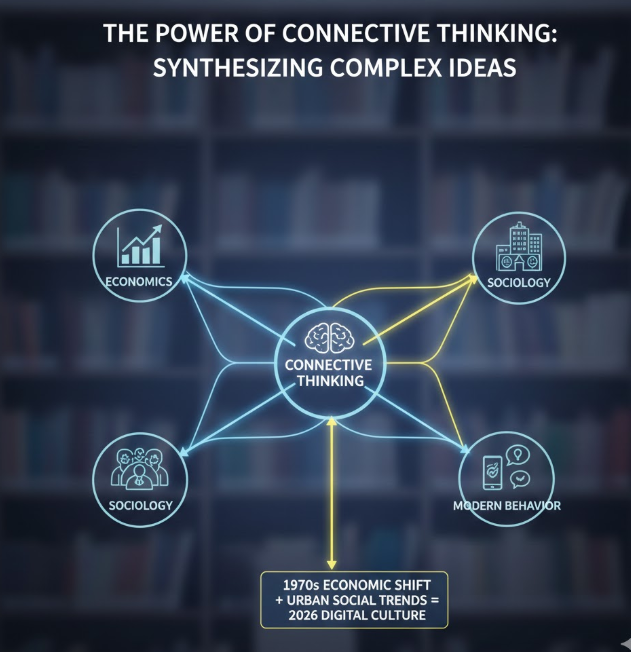
In 2026, the most successful students are those who can “zoom out” to see the big picture and then “zoom in” to analyze the fine details. This mental flexibility is something that algorithms struggle with because they operate on probability rather than lived experience. When you write an essay on environmental policy, you aren’t just citing facts; you are reasoning through the ethical implications of those policies on future generations—a task that requires empathy, a core component of human cognition.
4. Developing an “Expert Mindset” through Support
The journey to mastering cognitive reasoning doesn’t happen in a vacuum. Often, the best way to learn is through observation and feedback. In the US and Canada, the move toward “Collaborative Learning” emphasizes that students should seek out resources that challenge them.
Professional academic services have evolved from being mere “fixers” to becoming essential pedagogical tools. When a student reviews a professionally edited paper, they aren’t just looking at corrected grammar; they are seeing a map of logical reasoning. They see how a professional connects a claim to a piece of evidence. This “reverse engineering” of high-quality writing is one of the fastest ways to develop a personal cognitive framework. It teaches the student how to structure their thoughts, how to anticipate counter-arguments, and how to maintain a consistent academic voice.
5. Why Employers Value Reasoning Over Grades
In the professional world, especially in the US job market, employers are increasingly looking for “soft skills” that cannot be easily automated. A high GPA is impressive, but the ability to solve a problem that has no clear instructions is what gets people hired and promoted. In a work environment, you won’t always have a prompt to feed into a bot; you will have a crisis, a budget shortfall, or a team conflict.
These situations require the same cognitive reasoning developed during a challenging academic career. Whether it’s deciding which marketing strategy to pivot to or how to manage a diverse team, the “mental muscles” built during essay writing—such as research, analysis, and persuasive communication—are the same ones used in the boardroom.
6. The Future of Human-Centric Academia
As we look toward the future of education, it is clear that technology will continue to evolve, but the core of academia will remain deeply human. The ability to think, reason, and create with purpose is what separates a student from a spectator. We are entering an era where “what” you know is less important than “how” you think.
By focusing on developing your cognitive reasoning—and using professional resources to refine those skills rather than replace them—you ensure that your voice remains the most powerful asset in the room. The goal of education has never been to turn students into databases; it has always been to turn them into thinkers.
About The Author:
Jack Williams is a veteran academic consultant and education tech analyst based in Toronto. With over a decade of experience in curriculum development and scholarly communication, he specializes in helping students navigate the intersection of human cognitive skills and digital learning tools. Currently, he collaborates with myassignmenthelp to provide students with high-level strategic insights, ensuring they maintain academic integrity and excellence in an increasingly automated world.
Frequently Asked Questions
1. How does human reasoning improve academic performance?
Higher-order thinking skills allow students to go beyond basic memorization and actually grasp the “logic” of a subject. By developing strong analytical muscles, students can synthesize complex information more efficiently, leading to better comprehension and more persuasive arguments.
2. Why is critical thinking considered a superior asset to automated tools?
While software can process data at high speeds, it lacks the ability to understand context, cultural nuance, and ethical implications. Human reasoning is required to verify facts, identify hidden biases, and create original insights that align with specific academic standards.
3. How many sentences should a typical short-form reflection contain?
For a concise academic reflection or abstract, a standard length is approximately 6 to 9 sentences. This structure provides enough room for an introductory hook, two or three supporting points with evidence, and a concluding statement that ties the thoughts together.
4. What are the best ways to practice concise writing?
The most effective way to improve clarity is through active revision. Focus on removing filler words, choosing strong verbs over passive phrases, and ensuring each sentence contains only one main idea. Setting strict word limits for practice assignments helps train the brain to prioritize quality over quantity.